
Hot Take: Titanium Will Eventually Overtake Stainless Steel
Why the future of luxury integrated-bracelet sports watches may be defined by comfort, understated aesthetics, and performance.

I had always wanted a Rolex GMT-Master II Pepsi after the Ref. 126710BLRO was introduced in 2018. I ended up getting a Tudor Pepsi first, but after a while I still wanted the real “Pepsi.” Then I was offered a Rootbeer, the best my AD could do for me, and I accepted. As you might have guessed, I still wanted the steel Pepsi.
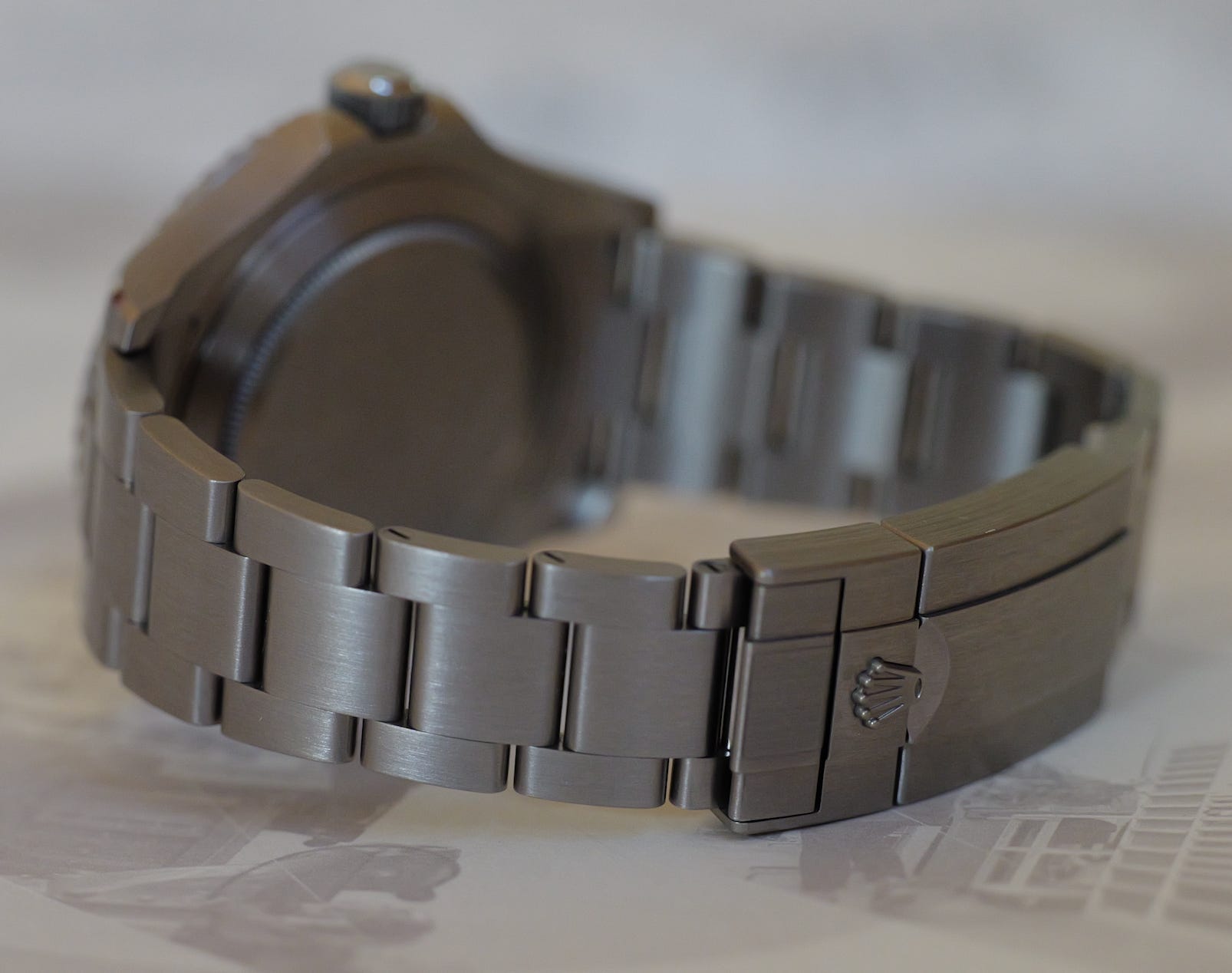
My hope of getting a Pepsi at retail was dashed earlier this year when the Ref. 126710BLRO was discontinued. I visited Steve, my SA at Rolex Boutique J. Licht & Sons, to update my wish list. This time, I chose the Yacht-Master 42 in RLX titanium, Ref. 226627.
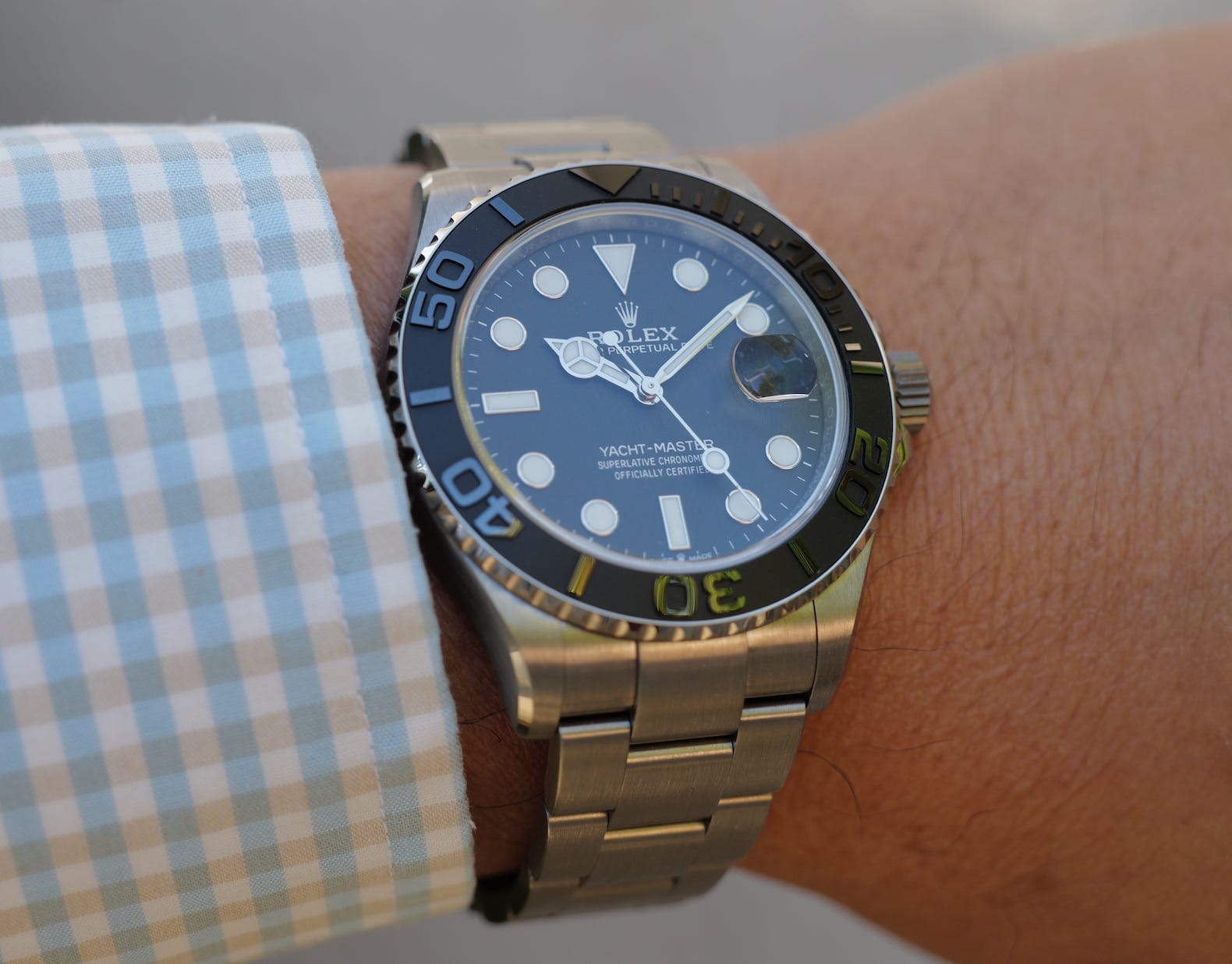
My luck changed, and I received a call from Steve not long afterward. When he helped me put on the watch, it was a stunning yet understated beauty. After wearing it for a week, I realized that between the flashy steel Pepsi and this handsome, lightweight Yacht-Master, I actually preferred the more understated and sophisticated piece. I have also received many compliments from fellow watch enthusiasts.
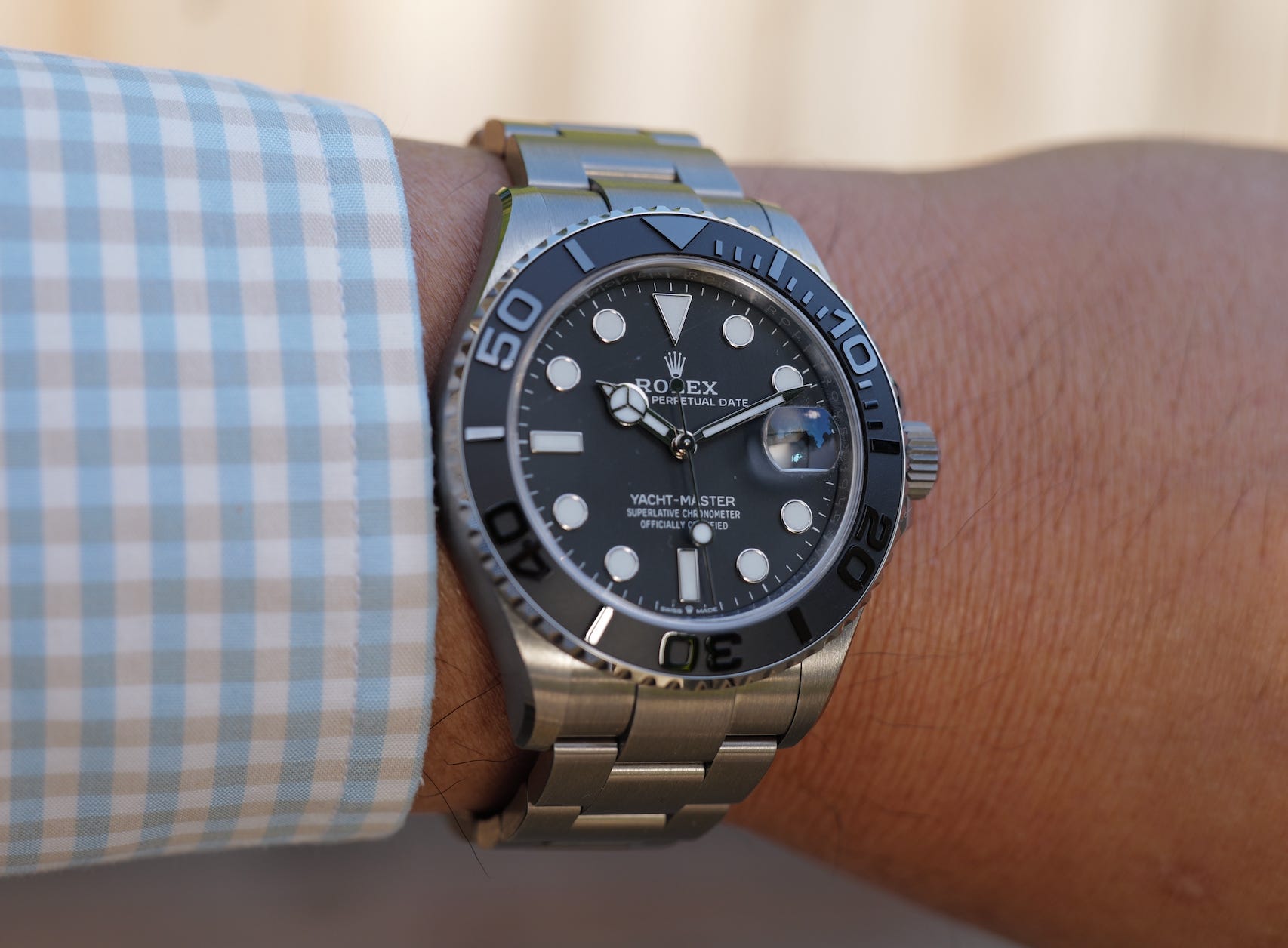
Could this be a sign of a larger trend? Recent titanium releases from top brands, combined with my experience owning the Rolex Ref. 226627, have convinced me that titanium will eventually overtake stainless steel as the preferred metal for sports watches.
You don’t agree? Then this is my hot take. My full argument is this: for luxury integrated-bracelet sports watches, the preferred metals going forward will be either precious metals for their status and heft, or titanium for its appearance and comfort.
That doesn’t mean stainless steel will disappear. It simply won’t be the most desirable metal anymore.
Now I’ll present my analysis and make my case, ending with some gorgeous titanium sports models. This may be my most controversial article so far, so please leave a comment to support or challenge my take.
Titanium versus Stainless Steel
First, it is useful to understand the differences between Grade 2 and Grade 5 titanium, as both are used in watchmaking. Grade 2 titanium is about 99% pure and is softer than stainless steel, making it more prone to scratches. Its softness also means it cannot be mirror polished to the same high standard expected in luxury watchmaking.
Grade 5 titanium consists of approximately 90% titanium, 6% aluminum, and 4% vanadium. This alloy is significantly stronger than the stainless steels commonly used in watchmaking. It can also be polished, brushed, and sandblasted to a very high standard. In the remainder of the article, we will focus on Grade 5 titanium exclusively.
Let’s examine the key advantages and disadvantages of Grade 5 titanium as a material for high-end integrated-bracelet sports watches, compared directly with stainless steel.
Weight
Titanium is generally 42% to 45% lighter than steel, resulting in a noticeably more comfortable wearing experience, whether for daily use or sports activities. Imagine running long distances or hiking in the mountains. A titanium watch on a matching bracelet is far more comfortable than a heavy steel model.
Strength
Strength refers to the maximum stress a material can withstand before permanent deformation or failure. Grade 5 titanium is approximately 1.5 to 2 times stronger than the stainless steels. This allows manufacturers to produce thinner lugs, slimmer bracelet links, and greater structural rigidity while using less material.
Scratch Resistance
Both materials offer good scratch resistance, but stainless steel is generally believed to hold up slightly better over the long term. Minor scratches are also often less noticeable because of its brighter finish.
Corrosion Resistance
Both materials are highly resistant to corrosion. Titanium, however, is virtually immune to corrosion under normal wearing conditions. It withstands perspiration, seawater, humidity, acids, and salt exceptionally well. Its natural oxide layer is among the most stable of any engineering metal.
Thermal Conductivity
Titanium conducts heat much more slowly than stainless steel. As a result, it transfers far less heat away from your wrist when you first put it on. It quickly warms to body temperature, never feels uncomfortably cold, and remains noticeably more comfortable in cold weather. This is often one of the first differences collectors notice when switching from steel to titanium.
Polishing, Brushed Finishing, and Machining
Because of its strength, titanium is more difficult to machine than steel. It requires specialized tooling and longer processing times, which increase manufacturing costs. Ironically, this is often part of the appeal for collectors, much like the appreciation for watches made with tantalum cases and bracelets.
In terms of the final finish, titanium cannot quite match steel’s bright, jewelry-like appearance. However, the gap has narrowed thanks considerably to advances in machining and finishing techniques. At the same time, titanium offers its own distinctive aesthetic. Its darker tone and more understated appearance have become increasingly appreciated by collectors.
Summary
From a materials engineering perspective, Grade 5 titanium is arguably the more advanced material. It is lighter, significantly stronger, offers a superior strength-to-weight ratio, provides exceptional corrosion resistance, and is more comfortable to wear.
Stainless steel’s appeal lies not in superior engineering performance, but in its ease of finishing, resistance to visible wear, and bright, jewelry-like appearance. That distinction may be at the heart of the shift in collector preferences that is taking shape.
The Titanium Adoption Curve
Now let’s look at the brands’ offerings and examine their decisions regarding titanium as a material for sports watches. A total of 15 makers of luxury integrated-bracelet sports watches have been identified and grouped in the table below. We can clearly see which brands offer cases and bracelets in precious metals, titanium, and stainless steel.
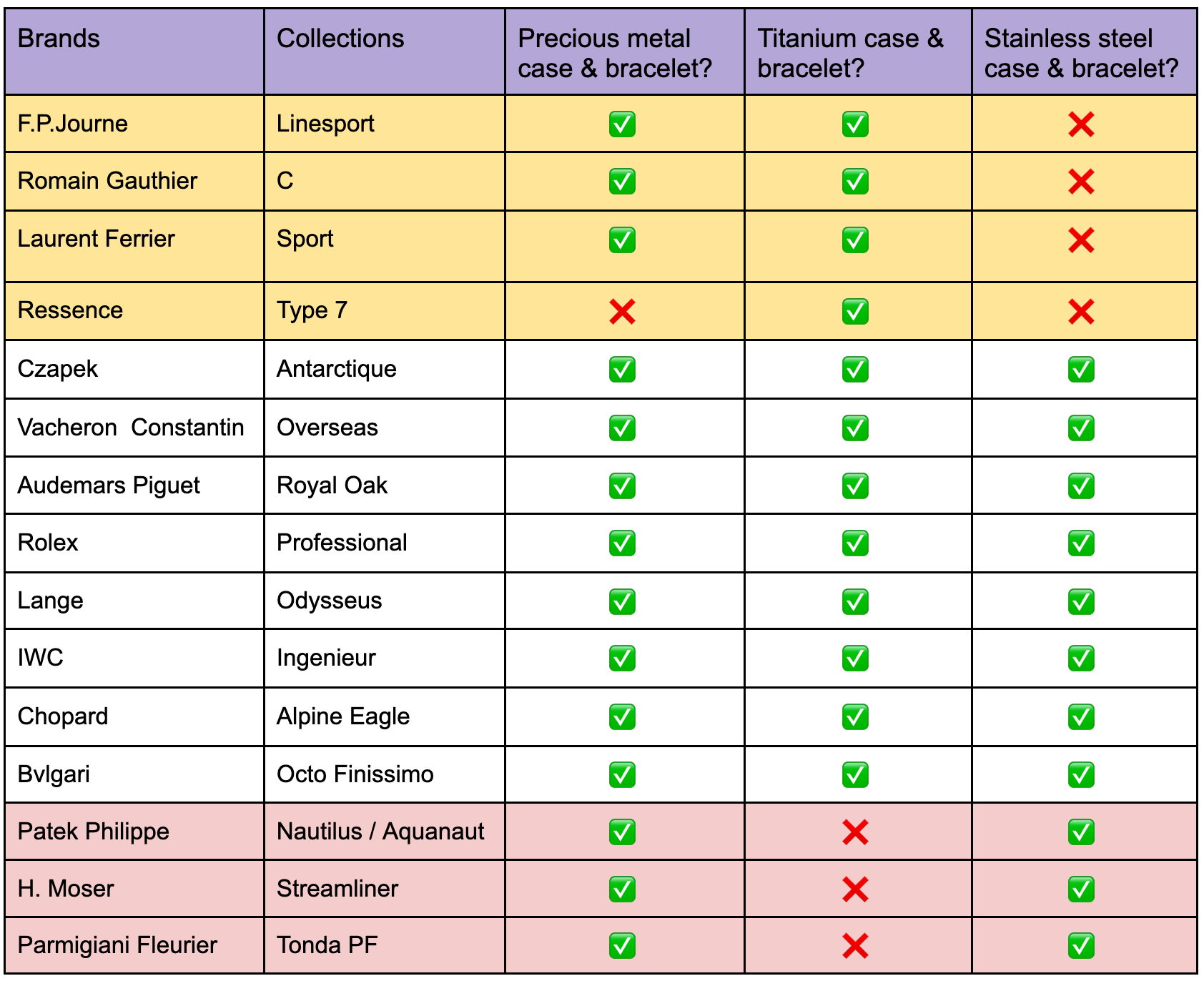
The brands can be divided into three groups. The first group, consisting entirely of top independent brands, offers sports watches in titanium but not in stainless steel. Most also offer sports watches in precious metals.
F.P.Journe famously launched the LineSport Collection with an aluminum case and bracelet in 2011, aiming to create an ultra-lightweight sports watch. Three years later, the brand switched to titanium, where it remains today, as aluminum proved to be a bit too soft. For the independent brands in this group, including F.P.Journe, lightweight construction and wearing comfort appear to be the highest priorities.
The second group consists of eight leading brands that offer all three materials: stainless steel, titanium, and precious metals. With higher production volumes than the independents, these brands are well positioned to offer a broader range of choices. At the same time, they have clearly recognized the advantages of titanium and are giving customers the option to choose.
The final group of “holdouts” includes industry heavyweight Patek Philippe, which is celebrating the 50th anniversary of the steel Nautilus this year. These brands have been more cautious about adopting titanium for their sports watches.
Borrowing the terminology from the marketing classic Crossing the Chasm, the independent brands, led by F.P.Journe, can be viewed as the Innovators and Early Adopters in titanium sports watches.
Audemars Piguet, Chopard, Rolex, and several others represent the Early Majority. They have embraced titanium while continuing to invest in stainless steel, effectively letting the market determine titanium's long-term role in their collections.
Finally, Patek Philippe, H. Moser & Cie., and Parmigiani Fleurier remain cautious adopters. In Crossing the Chasm terms, they currently sit on the late side of the adoption curve, continuing to bet on the enduring appeal of stainless steel.
From this survey, we can conclude that titanium is clearly an emerging material for luxury sports watches, even if it is still far from overtaking stainless steel. At the same time, the direction of the industry is becoming increasingly clear. More and more brands are embracing titanium as a core material for their sports watch collections.
Titanium at Its Best
My hot take is not based primarily on an analysis of titanium's material properties or the product strategies of leading brands. Instead, it is driven by my own experience wearing titanium watches. Their lightweight, exceptional comfort, high-tech aesthetic, and warm, satisfying feel to the touch have won me over.
Now, let's enjoy some of the finest titanium integrated-bracelet sports watches available today. Some of the photographs were taken by me, while others are from Instagram and the brands' websites.
Rolex Yacht-Master 42 RLX Titanium Ref: 226627
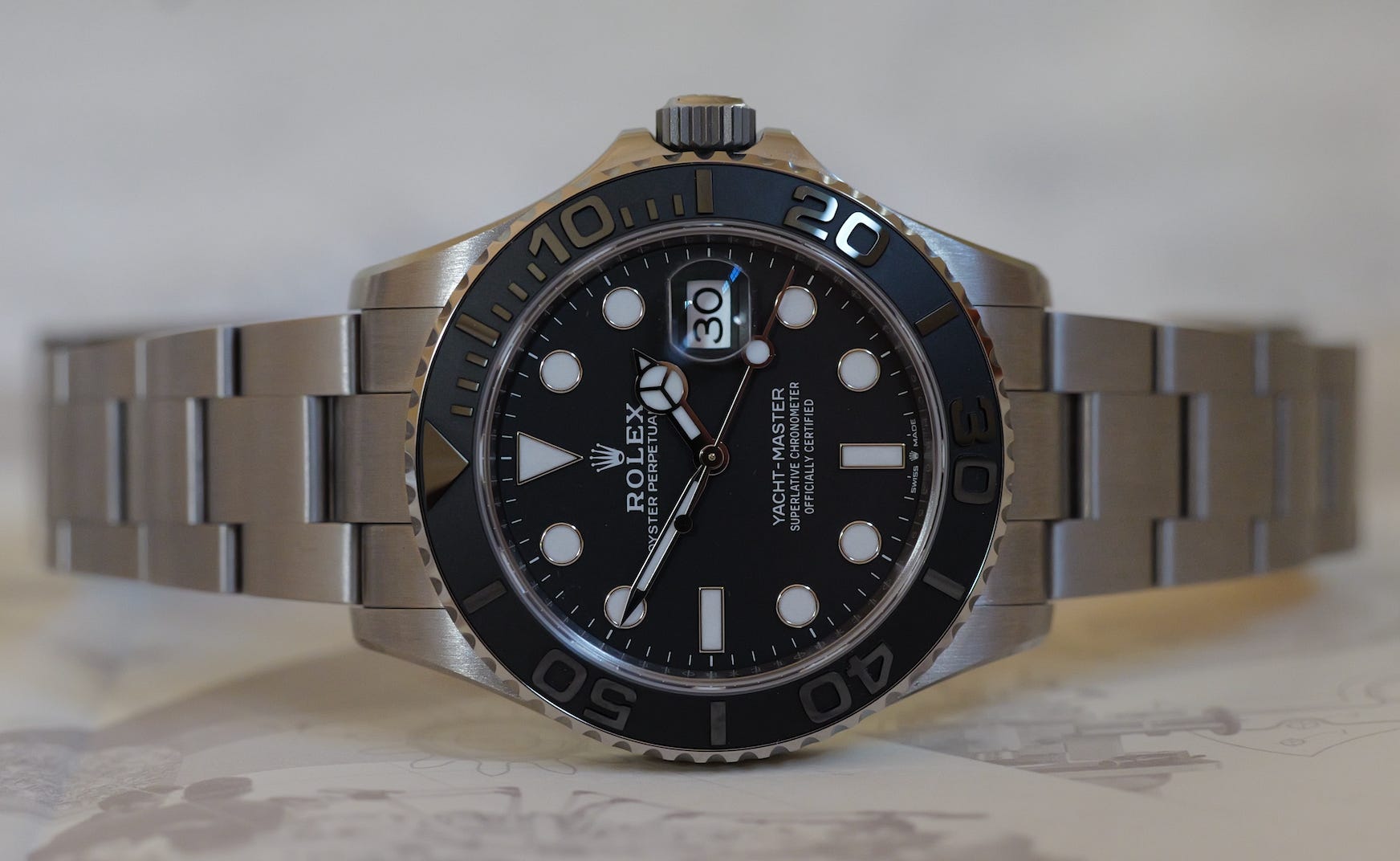
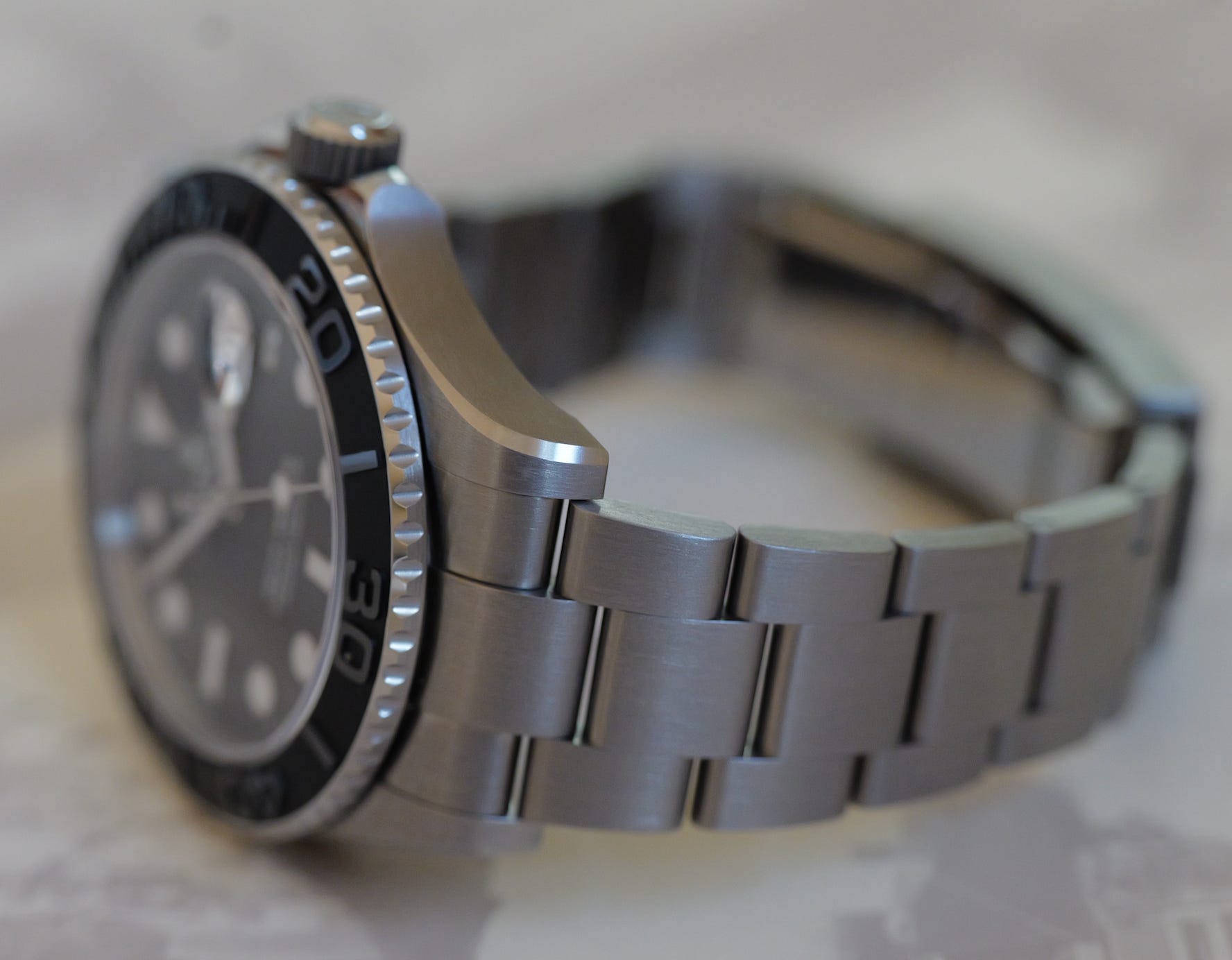
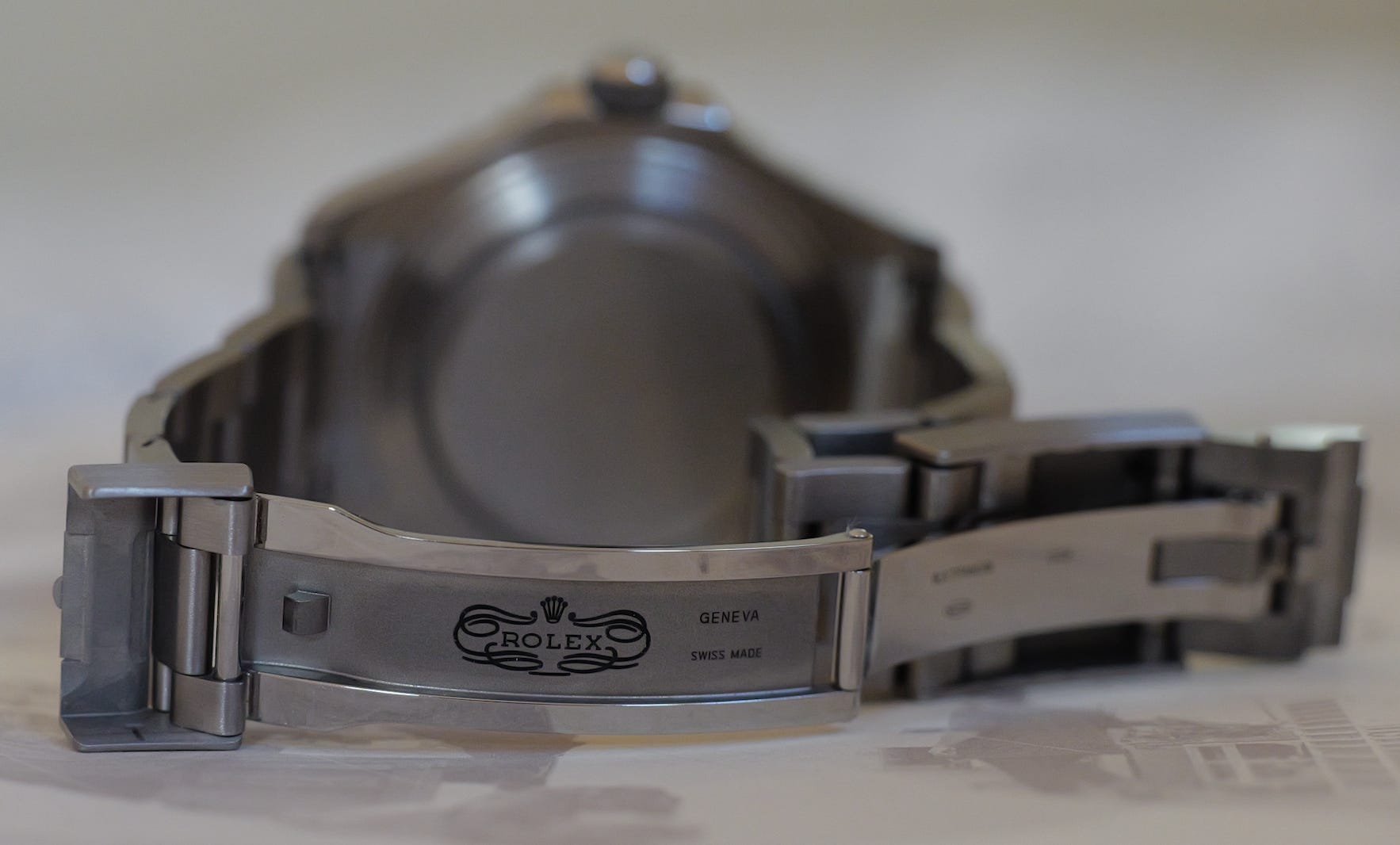
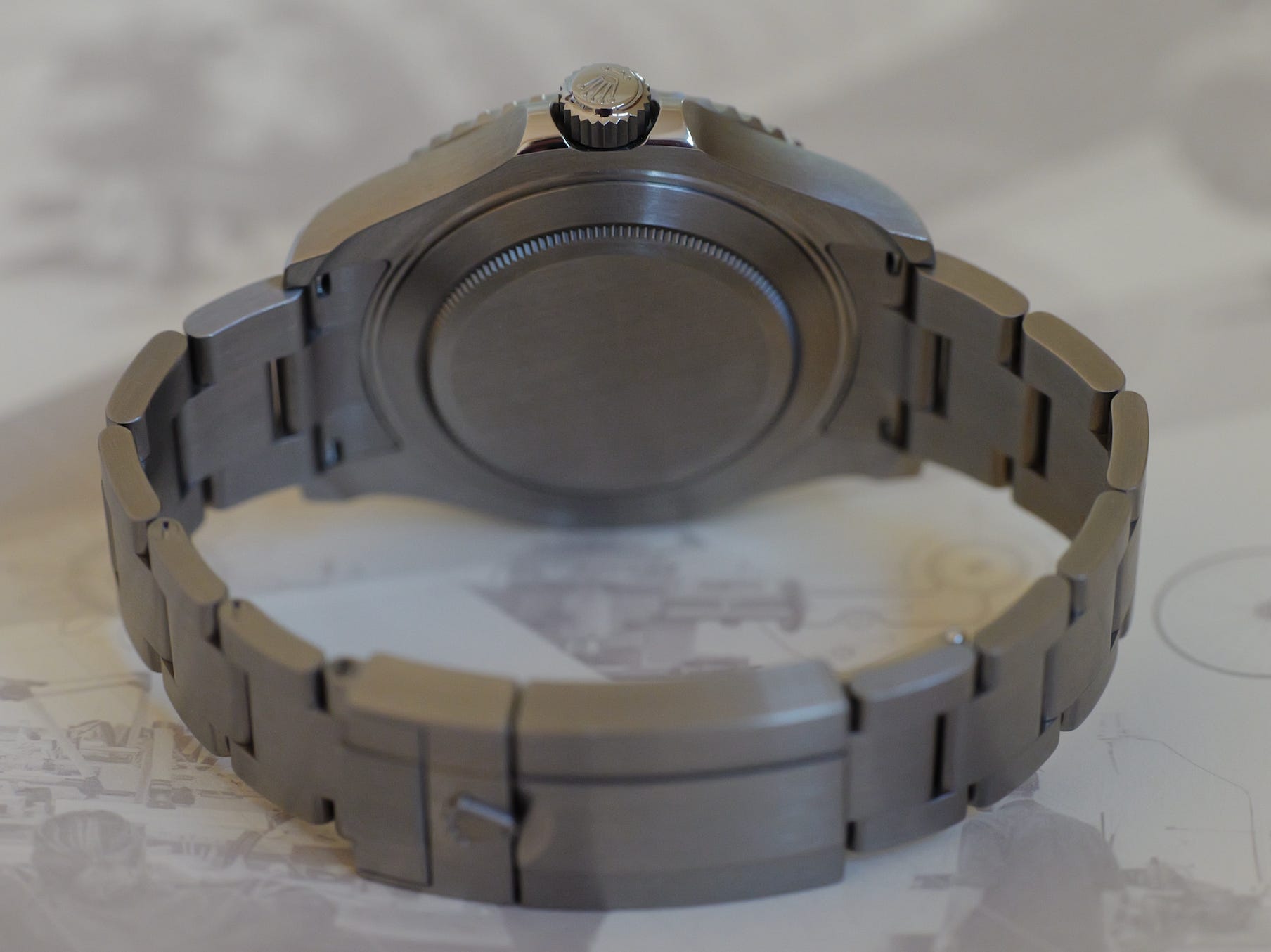
RLX titanium is a Grade 5 titanium alloy specially selected by Rolex. Like all Grade 5 titanium alloys, it is exceptionally lightweight and is known for its mechanical strength and corrosion resistance. Another characteristic of RLX titanium is that it can be finished with either a polished or satin surface. However, its high mechanical strength also makes it difficult to machine, requiring Rolex to develop special production processes.
Currently, only two Rolex models are available in titanium: the Deepsea Challenge Ref. 126067 and the Yacht-Master 42 Ref. 226627. The Crown has apparently taken a measured approach to titanium, introducing it first on relatively niche models rather than its core sports watches. Collectors, however, have responded enthusiastically. Since its debut in 2023, the titanium Yacht-Master has become one of the most sought-after Rolex models.
For daily wear and outdoor activities, the titanium Yacht-Master is the Rolex to own. Another hot take. Let’s face it. Excluding the Daytona, Rolex’s Professional models all share a similar design language, from the hour markers and Mercedes hands to the bezel. To me, it makes perfect sense to own just one. If that is the case, the cutting-edge titanium Yacht-Master would be my top choice.
Of course, the Daytona has a distinctly different look. A two-watch collection consisting of the Daytona and the titanium Yacht-Master would perfectly represent Rolex’s sports watches.
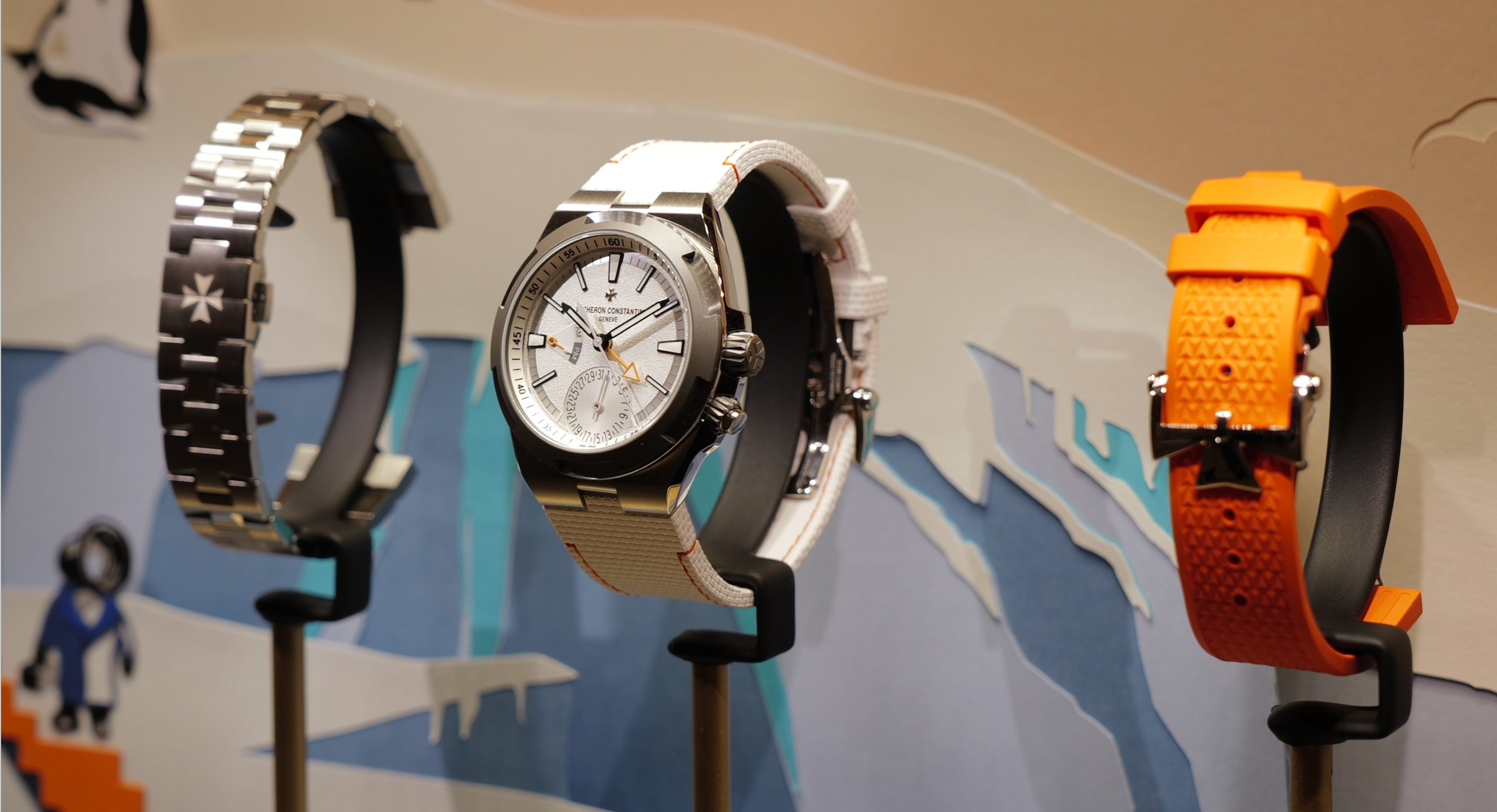
Vacheron Constantin Overseas Dual Time Cardinal Points


Czapek Antarctique Tourbillon - Cosmic Blue

Ressence Type 7


Laurent Ferrier Grand Sport Tourbillon Pursuit
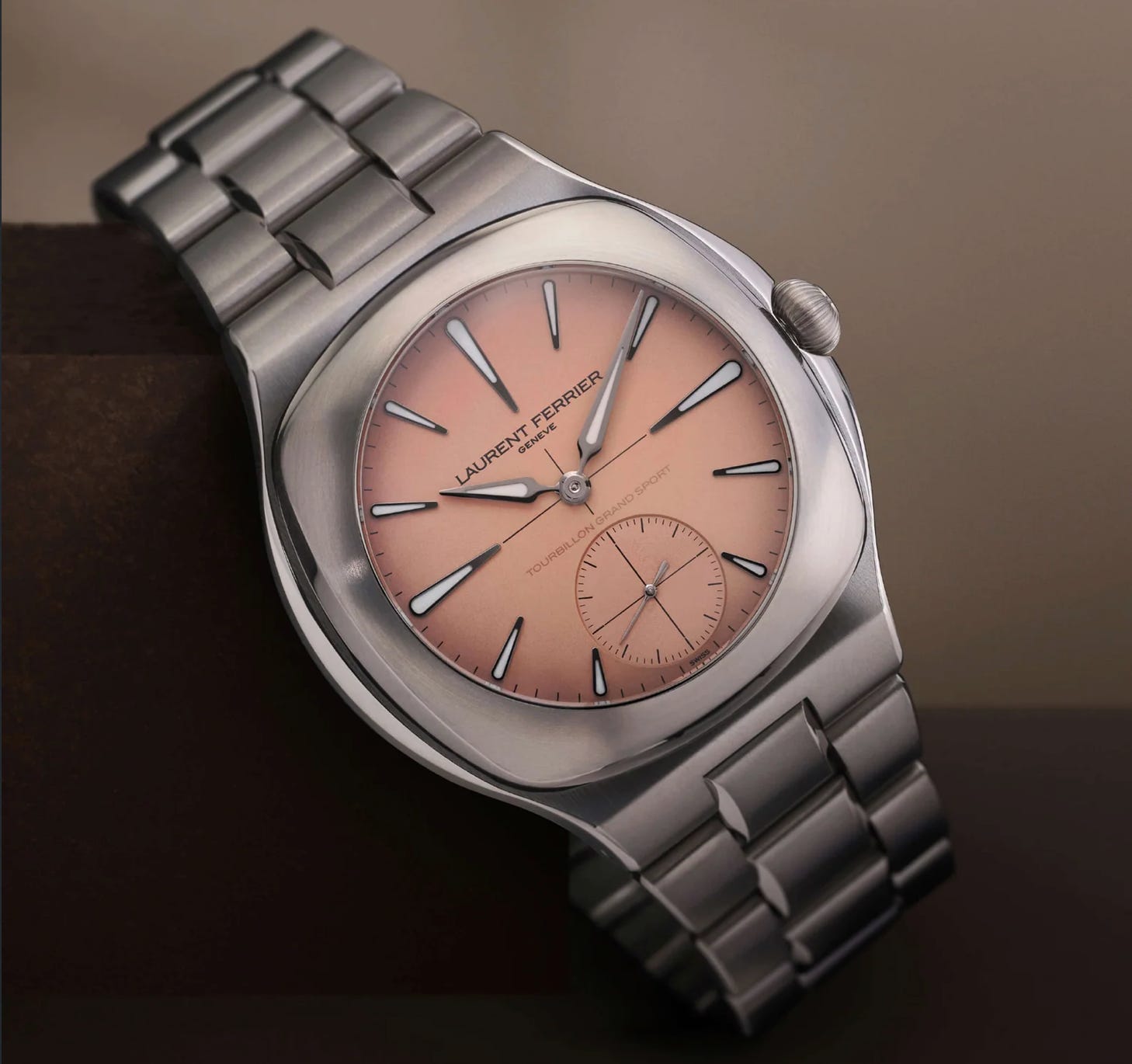
Laurent Ferrier Sport Auto Blue

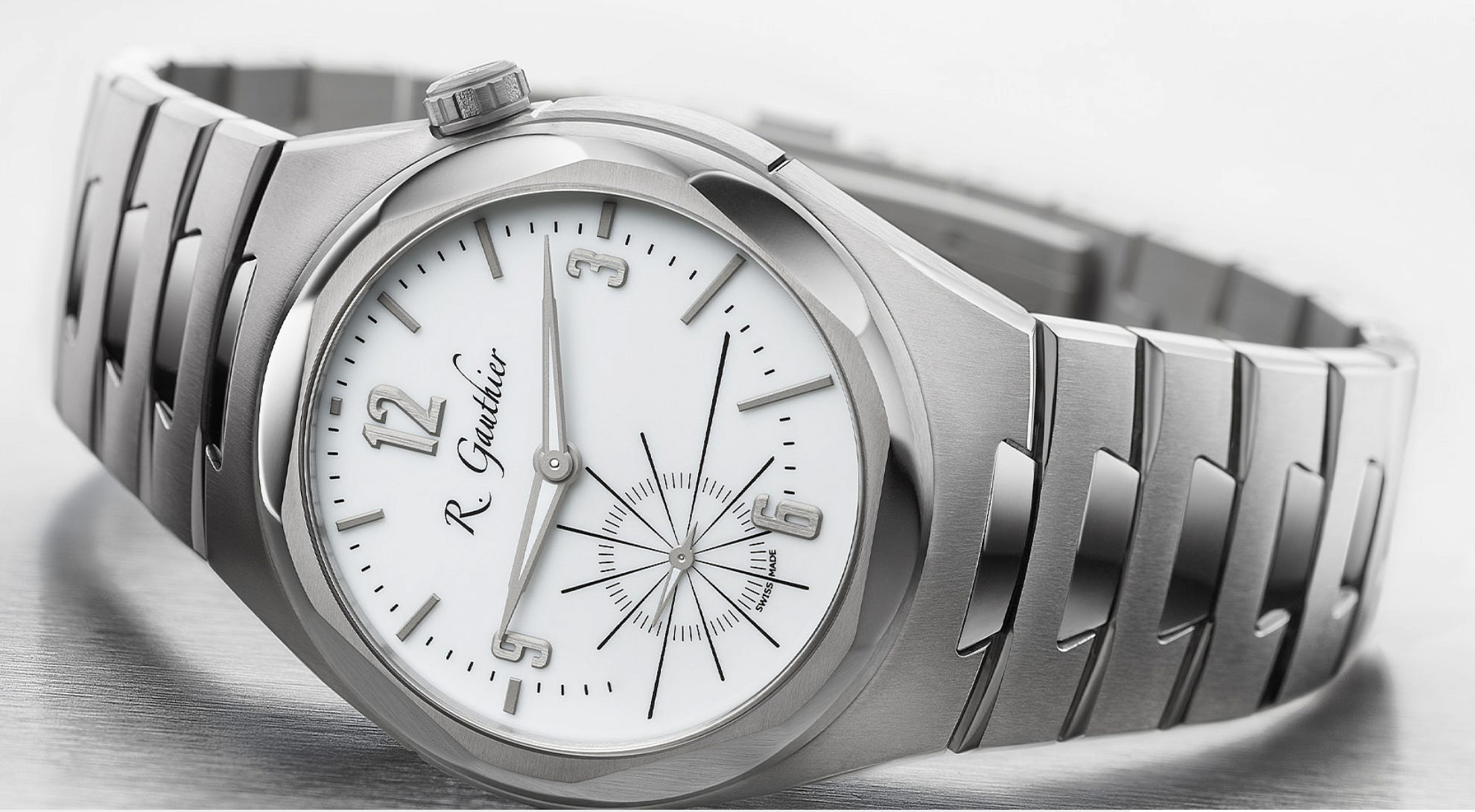
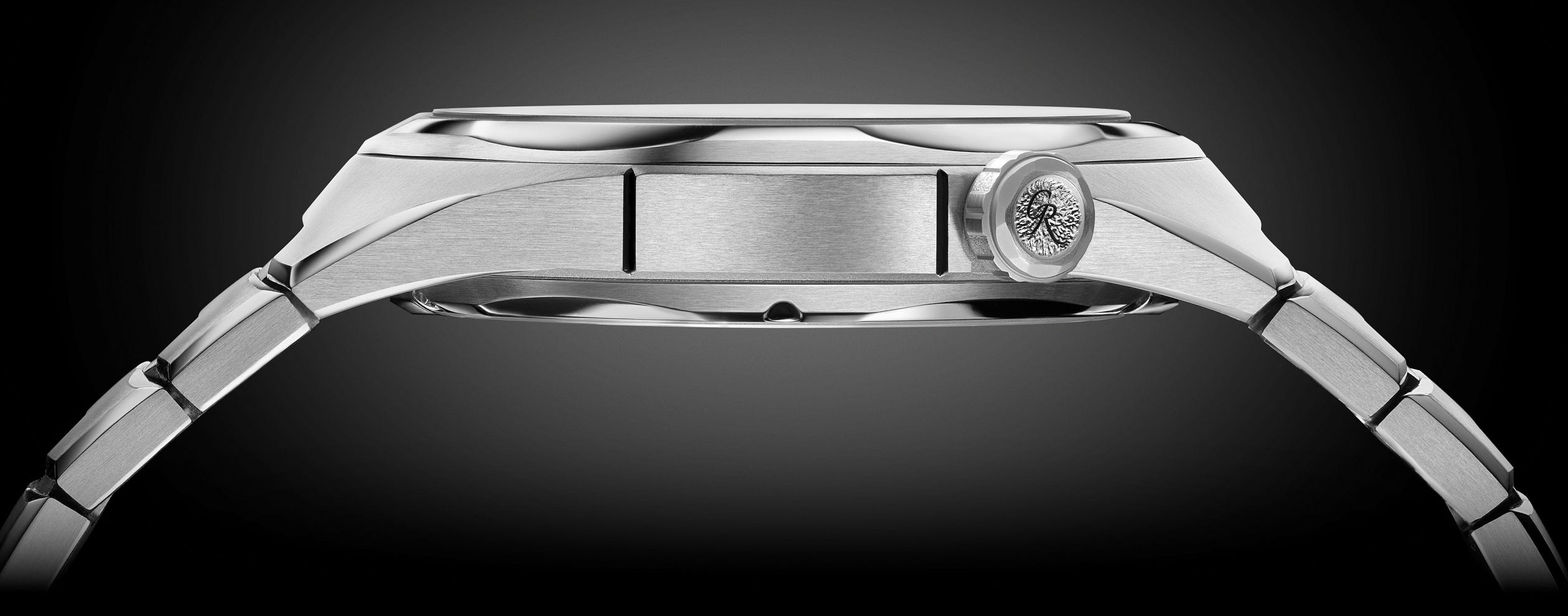
Romain Gauthier C Titanium Edition Bracelet Lumen Dial
Romain Gauthier has chosen to offer his C collection of sporty watches exclusively in platinum and titanium. The titanium model shown below showcases the highest level of engineering in both case and bracelet design.
Titanium has allowed Romain Gauthier to push both engineering and design further, from the sculpted bezel to the sophisticated bracelet construction, while delivering an exceptional wearing experience that is difficult to match with stainless steel. Feedback from owners has been overwhelmingly positive, with wearing comfort consistently cited as one of the watch’s greatest strengths.
F.P.Journe LineSport Automatique Reserve
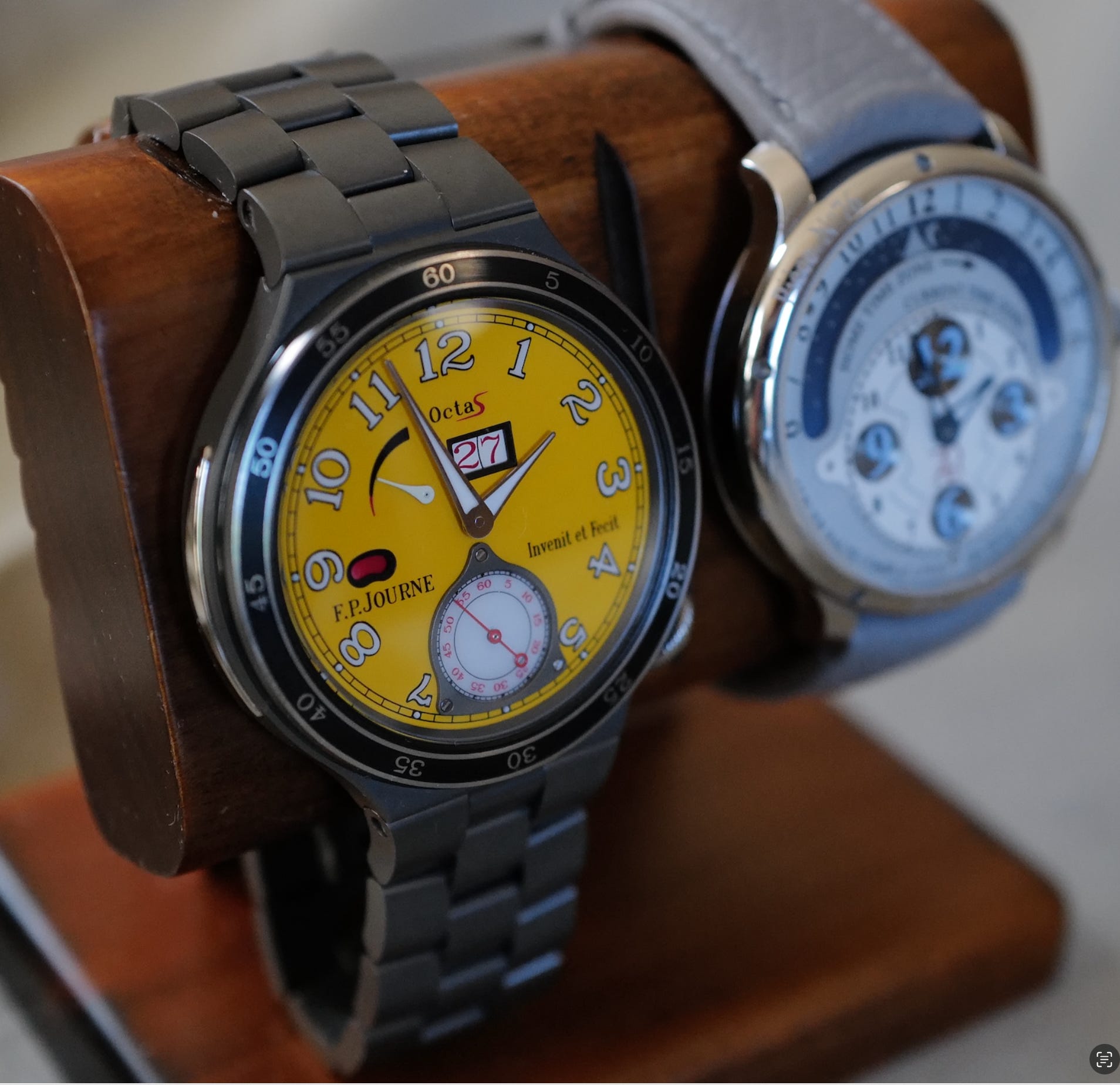
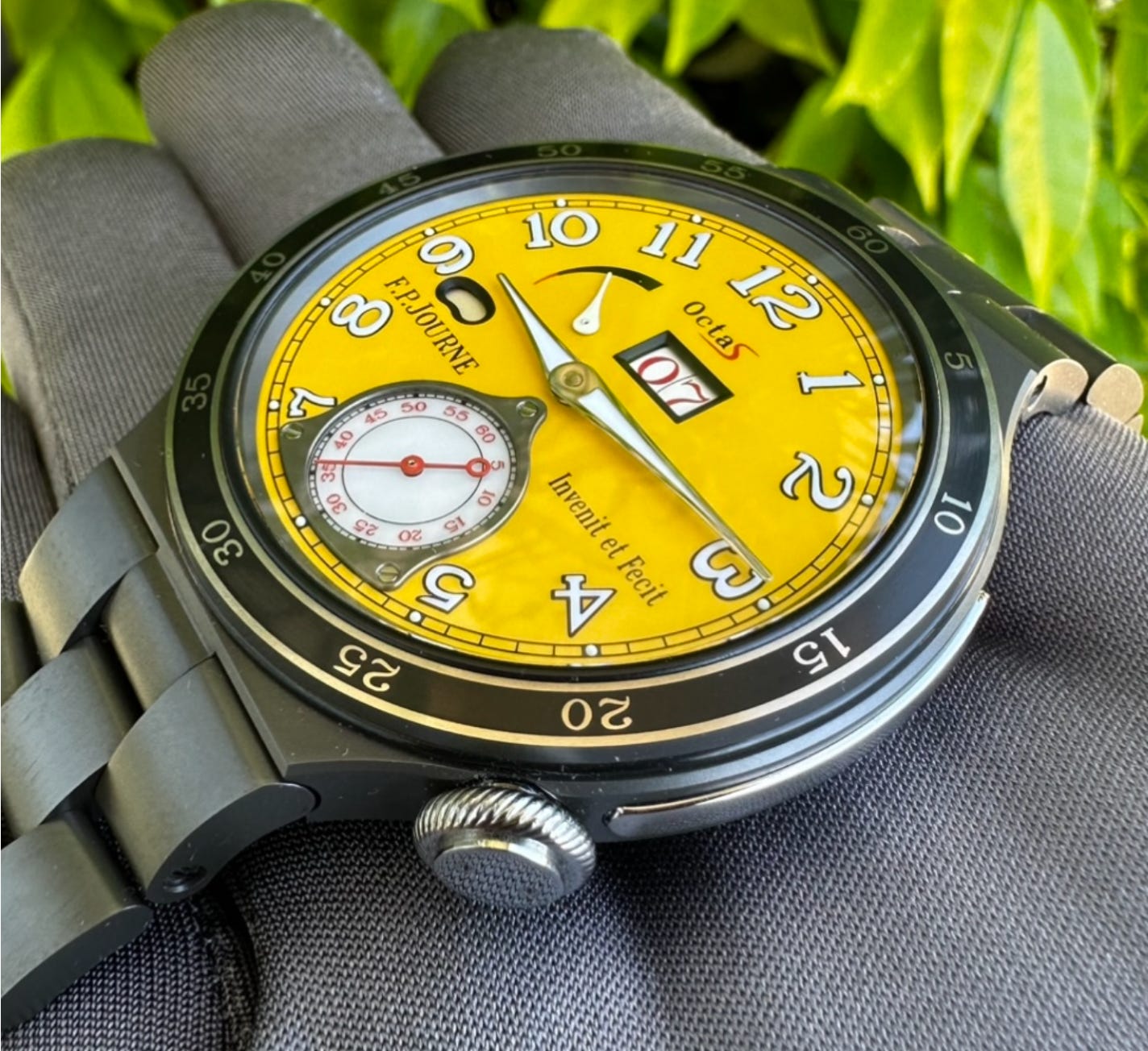
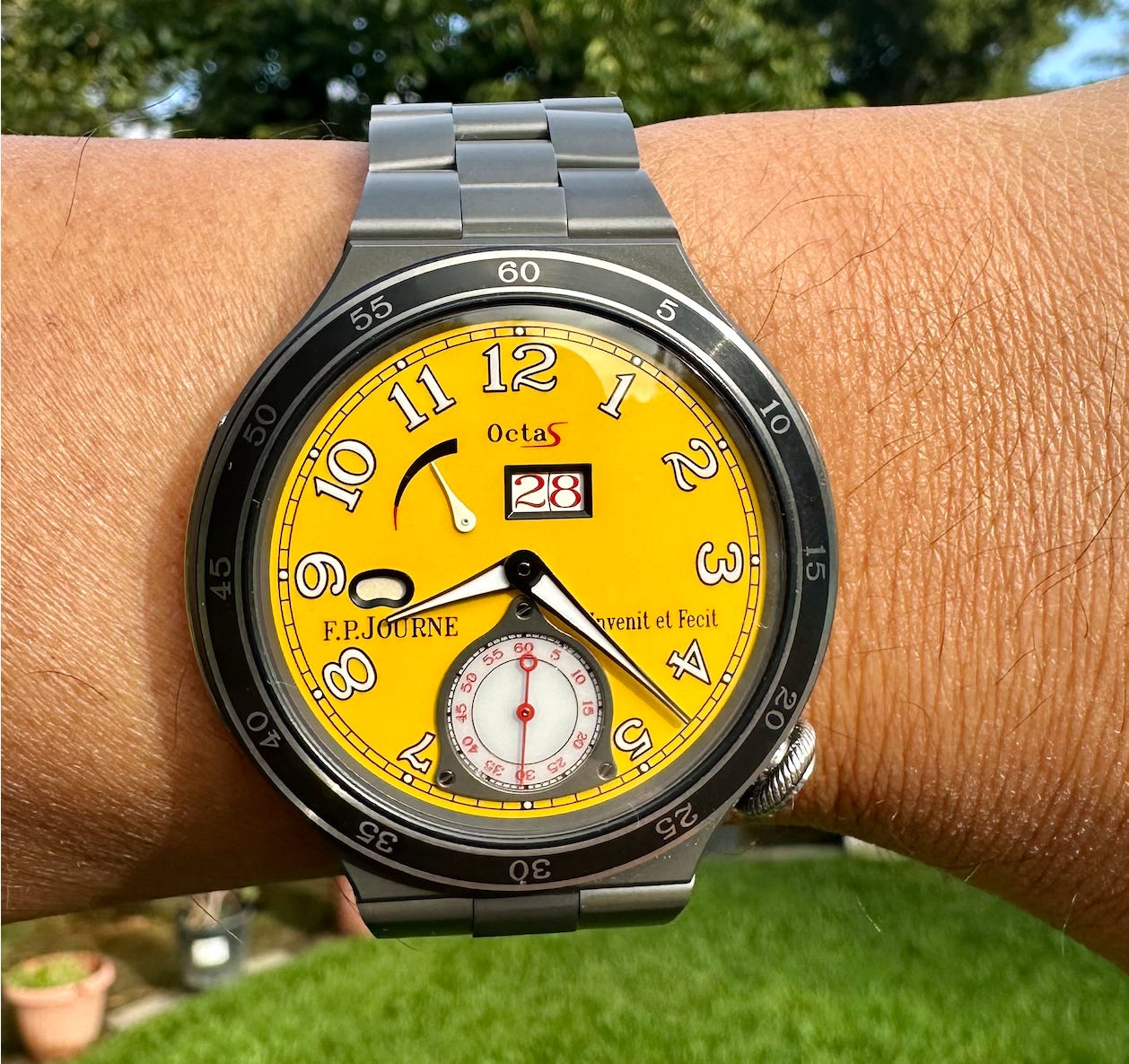
Excluding the Chronomètre Furtif, which was unveiled last year, the LineSport collection by F.P. Journe consists of the Automatique Réserve, Centigraphe, and Chronographe Rattrapante. Each model is available in titanium, rose gold with a hammered finish, or platinum with a hammered finish.
For 2026, F.P. Journe introduced a limited nine-piece LineSport box set, including three titanium models with a new burgundy dial. True to Mr. Journe’s longstanding philosophy, the release has received very little media coverage, reflecting his preference not to fuel the hype surrounding his watches.
Below are a few photographs of the LineSport Automatique Réserve with its vivid yellow dial, which I reviewed previously.
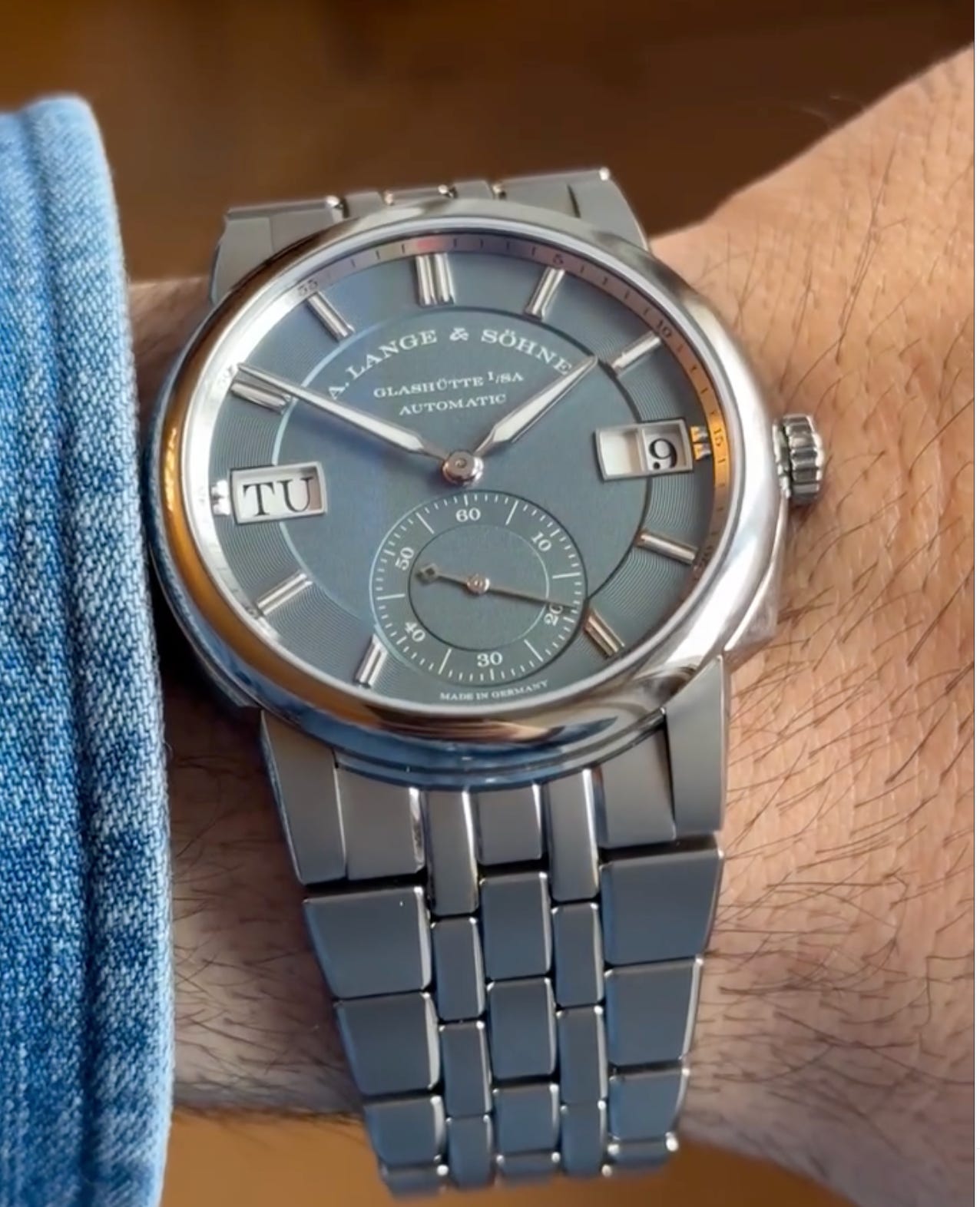
A. Lange & Söhne Odysseus in Titanium 250 Limited Edition

The Future Is Light
While we have explored the properties of titanium, its adoption by watch brands, and some outstanding titanium timepieces currently available, we have not yet touched on the cost factor.
As discussed, titanium is a more challenging metal to machine, resulting in higher manufacturing costs. Let’s compare the titanium Rolex Yacht-Master with the Rolex Submariner Date Ref. 126610LN, which is powered by the same Caliber 3235. While the Submariner is priced at $11,350, the Yacht-Master costs $16,050, a difference of 41%. As of today, a titanium watch generally costs more than its stainless steel counterpart, and this price gap may remain for some time.
Nevertheless, the broader trend seems increasingly clear. In the niche of luxury integrated-bracelet sports watches, stainless steel has reigned for decades. From the perspectives of wearing comfort, aesthetics, and engineering performance, titanium is poised to take over. Many brands are already positioning themselves to ride this wave. Ultimately, the biggest beneficiaries will be us watch enthusiasts.
I do not doubt that we will continue to enjoy our steel watches, but it is wonderful to have new choices. From that perspective, I’m perfectly happy whether my hot take turns out to be right or wrong.
I have a nickel allergy, so all of my watches are either titanium or precious metal. Although more expensive than SS, I couldn’t be happier with how many incredible pieces I’ve been able to acquire. For titanium pieces, I own the Rolex YM II (which I wear way more than I thought I would when I first bought it!), the Vacheron Constantin Overseas Cardinal Points North (which has become my weekend adventure watch), and a Blancpain Fifty Fathoms 42.3mm (which you omitted, but should consider as it wears great and is a treat to look at). I hope Patek (titanium Aquanaut!!!) and others will get on board or expand offerings because titanium watches are fantastic!
I’m one of those who prefer titanium and wish it were more widely offered. The Swiss watch industry, in particular, is slow to adapt/change (for many reasons). One trope that has held on in watches is the notion that heft = luxury. Mass equating to gravitas has long been a justification for the almost exclusive use of precious metals in watch cases. The introduction of steel in luxury watches was revolutionary and iconoclastic when AP released the Royal Oak back in 1972, and one could argue that steel didn’t become a primary luxury metal until over 40 years later.
Other than Richard Mille, few watchmakers trumpet light weight as a benefit or advance in wristwatches. This is an exception in the world of big boy hobbies that involve machines. From bicycles to cars to aircraft to sports equipment, lightweight, high strength materials represent higher value/cost options.
Hopefully, the Swiss watch industry will, at its usual glacial pace, embrace Titanium for its many benefits and make it widely available, preferably without a huge pricing premium (that, of course, is a whole ‘nother discussion).